

Baskets are one of those things that feel harmless at first. I added one next to the sofa for blankets. Another under the console for magazines. Then one more for “miscellaneous” items that don’t seem to belong anywhere else. Before I realize it, the living room has plenty of storage but very little calm.
What finally clicked for me was this: baskets don’t organize a space on their own. They only work when they’re used with intention. Without a system, baskets become soft hiding places for clutter, not solutions.
This guide breaks down the living room basket storage ideas I now rely on to keep things contained without making the room feel busy. These aren’t decorative tricks. They’re practical placements and habits that keep baskets working long-term.
Why Baskets Work So Well in Living Rooms
Living rooms need flexibility. They host movie nights, quiet mornings, guests, work sessions, and everything in between. Rigid storage often struggles here. Baskets, on the other hand, adapt easily.
They’re lightweight. They move when needed. They soften hard furniture lines and make storage feel less imposing. That’s why baskets show up in so many living rooms; they fit naturally into shared spaces.
This flexibility also makes them a perfect companion to open shelving and vertical solutions, similar to many wall storage ideas for the living room, where visual lightness matters just as much as capacity.
But that flexibility is also what makes them dangerous. Because baskets are forgiving, they get overloaded fast. Without limits, they quietly absorb clutter instead of controlling it.
How I Decide What Actually Belongs in a Basket
Before placing a single basket, I decide what type of items I’m dealing with.
Baskets work best for things that are lightweight, flexible, and used often. Throws, magazines, remote controls, cables, small toys, and extra pillows all behave well in baskets. Items that are rigid, fragile, or rarely used usually don’t.
I also think about access. If I reach for something daily, the basket needs to be open and visible. If it’s occasional, the basket can be tucked away. This same decision-making approach shows up in many basic home organization principles, where accessibility determines whether storage actually gets used.
Most importantly, I limit each basket to one category. The moment a basket becomes “everything storage,” it stops helping.
Choosing the Right Basket Type (This Matters More Than People Think)
Not all baskets behave the same way.
Woven baskets are visually warm and great for open storage, but they stretch if overfilled. Fabric baskets are softer and forgiving, ideal for kids’ items or casual storage, but they lose shape easily. Wire baskets offer structure and airflow, though they feel more utilitarian and need balance with softer elements.
Lids change everything. Lidded baskets hide clutter instantly, but they also reduce accessibility. I use them for backup items, not daily essentials.
Structure matters too. A basket that collapses under weight won’t stay neat, no matter how often it’s tidied.
Open Basket Storage That Feels Intentional, Not Messy
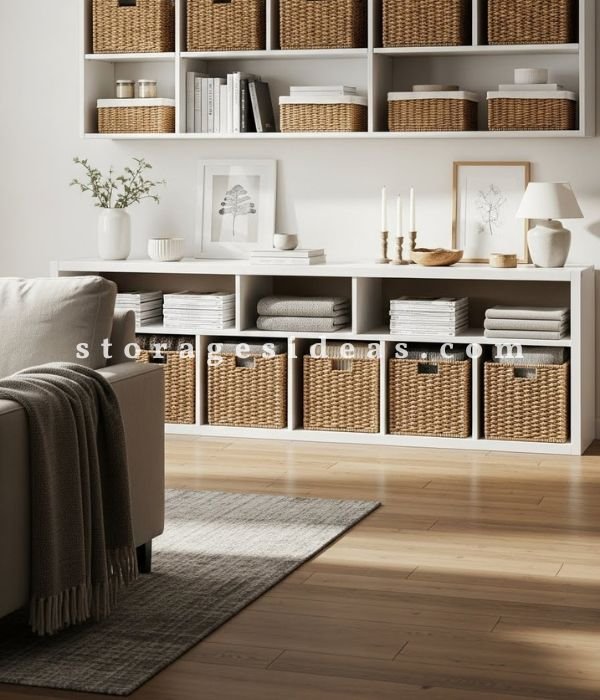
Open basket storage works when spacing is respected.
I use baskets under console tables, coffee tables with lower shelves, or open shelving, but never packed tightly. Visual breathing room is essential. One basket with space around it feels styled. Three crammed together feel chaotic.
Floor baskets beside seating can work beautifully for throws or pillows, especially when their size matches the furniture nearby. Oversized baskets next to small chairs feel unbalanced.
This is especially important in smaller homes, where lessons from small living room furniture and decor hacks apply directly to basket placement.
Open baskets should always look purposeful, even when they’re full. If contents spill or bulge, the basket is the wrong size.
Hidden Basket Storage for a Visually Calm Living Room
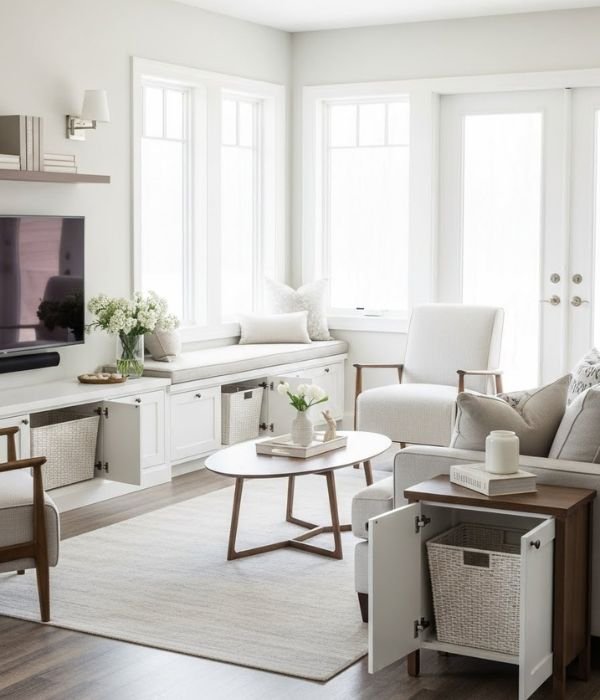
Hidden basket storage is where baskets really shine.
Cabinets with internal baskets allow separation without visual noise. Benches with basket compartments hide clutter while adding seating. Media units with basket sections soften bulky furniture and reduce hard lines.
I rely on hidden basket storage for items I don’t want to see but still need nearby extra cables, board games, or seasonal accessories.
Many of these setups borrow ideas from DIY living room storage cabinet solutions, where internal organization matters more than exterior appearance.
When baskets are hidden, function matters more than appearance. Durability and fit become the priority.
Using Baskets With Living Room Furniture
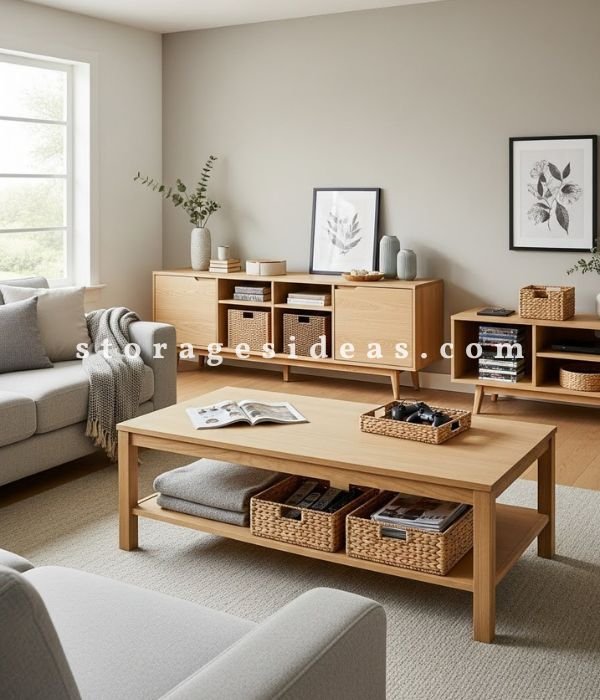
Some furniture pieces almost feel designed for baskets.
Coffee tables with lower shelves work best when baskets fit the shelf width exactly. Gaps make baskets slide and look accidental. Sideboards and credenzas can hold baskets inside or underneath, depending on style.
Media units benefit greatly from baskets. They corral loose items like controllers, remotes, and accessories that otherwise spread quickly.
I avoid forcing baskets into furniture that wasn’t meant for them. When baskets feel wedged in, they never stay tidy.
Living Room Basket Storage Ideas for Small Spaces
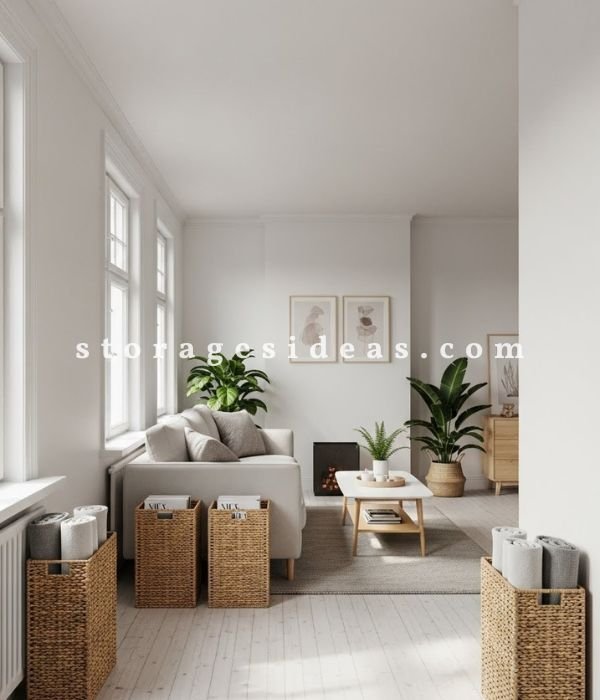
Small living rooms require restraint.
I use fewer baskets, not more. Vertical placement works better than spreading baskets across the floor. Tall, narrow baskets in corners often disappear visually while holding a surprising amount.
Slim baskets fit beautifully in tight gaps beside sofas or between furniture. Oversized baskets overwhelm small rooms instantly, even if they technically fit.
In small spaces, every basket needs a clear purpose. Decorative extras quickly become clutter.
Styling Baskets So They Look Like Decor
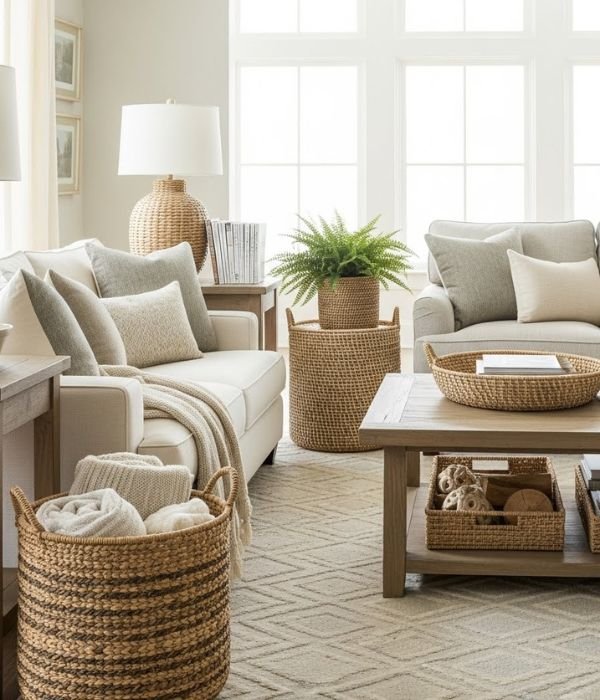
Baskets don’t need to match perfectly, but they do need to belong together.
I stick to one or two materials per room. Mixing too many textures creates visual noise. Color consistency matters more than people realize; neutral baskets blend, while dark or bold baskets demand attention.
I also pay attention to height variation. Too many baskets at the same height feel flat. Mixing tall and short baskets adds rhythm without chaos.
The goal isn’t to showcase baskets. It’s to let them quietly support the room.
Where Items Naturally Get Dropped (And Why Baskets Belong There)
Clutter follows behavior.
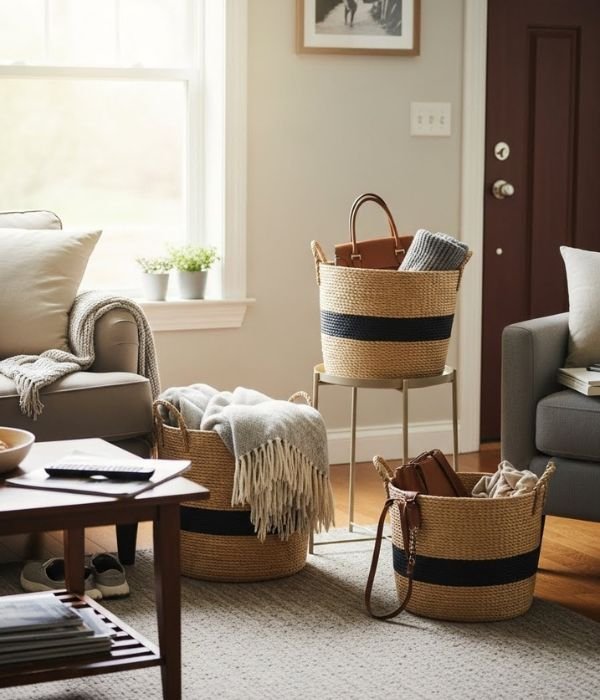
In my living room, items land in predictable spots next to the sofa, near side tables, and close to entry points. Fighting those habits never worked. Planning for them did.
I place baskets exactly where things naturally pile up. A basket near the sofa catches blankets. One near the door handles bags or scarves. This stops clutter before it spreads.
Baskets succeed when they meet habits, not when they try to change them.
Keeping Basket Storage From Turning Into Junk Storage
This is where most systems fail.
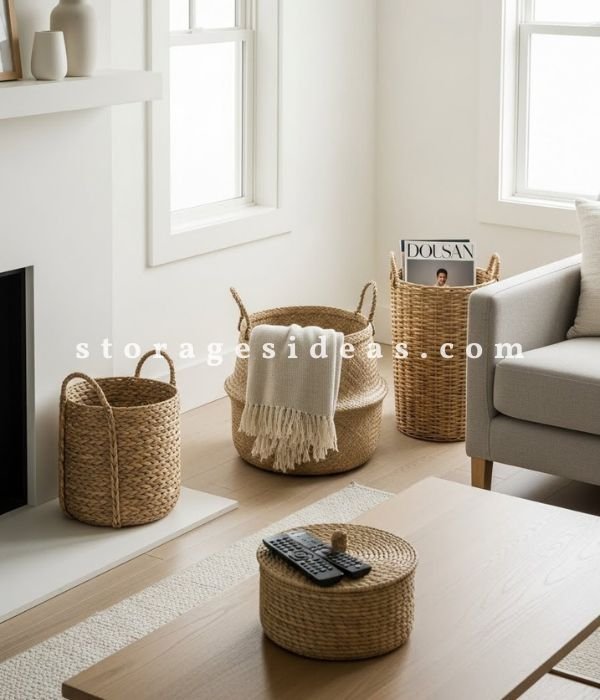
I follow three simple rules:
- Never overfill a basket
- Never mix categories
- Never keep a basket without a clear purpose
Once a month, I empty each basket quickly and remove anything that doesn’t belong. It takes minutes and prevents slow buildup.
If a basket consistently overflows, that’s a signal, not a failure. It means storage needs adjusting.
Common Basket Storage Mistakes I No Longer Make
Oversized baskets were my biggest mistake. They swallowed too much and encouraged hoarding. I also used to buy baskets before knowing what I’d store in them. That never worked.
Another mistake was treating baskets as invisible storage. Just because clutter is hidden doesn’t mean it’s solved.
Finally, I stopped using too many baskets in one room. Fewer, better-placed baskets outperform dozens every time.
FAQs
Are baskets good for living room storage?
Yes, when used intentionally. They work best for flexible, lightweight items.
What size baskets work best?
Medium baskets are the most versatile. Oversized ones fill too fast.
Should baskets match furniture?
They don’t need to match exactly, but they should complement the room’s materials and colors.
Are lidded baskets better than open ones?
Lidded baskets are better for hiding clutter. Open baskets work better for daily access.
How many baskets are too many?
If baskets start competing visually with furniture, there are too many.
Final Thoughts
Baskets can either calm a living room or quietly create clutter. The difference isn’t the basket, it’s how it’s used. The best living room basket storage ideas work because they respect behavior, space, and limits.
When baskets are chosen with purpose and placed where life actually happens, they fade into the background and let the room breathe. That’s when storage stops feeling like a fix and starts feeling like part of the home.
And that calm is worth far more than another empty basket waiting to be filled.
